Why We Keep Coming Back to Thermo Ash
There are certain materials that, once you have worked with them on enough projects, you develop a lot of confidence in.
For us, thermally modified ash — or thermo ash — is one of those materials.
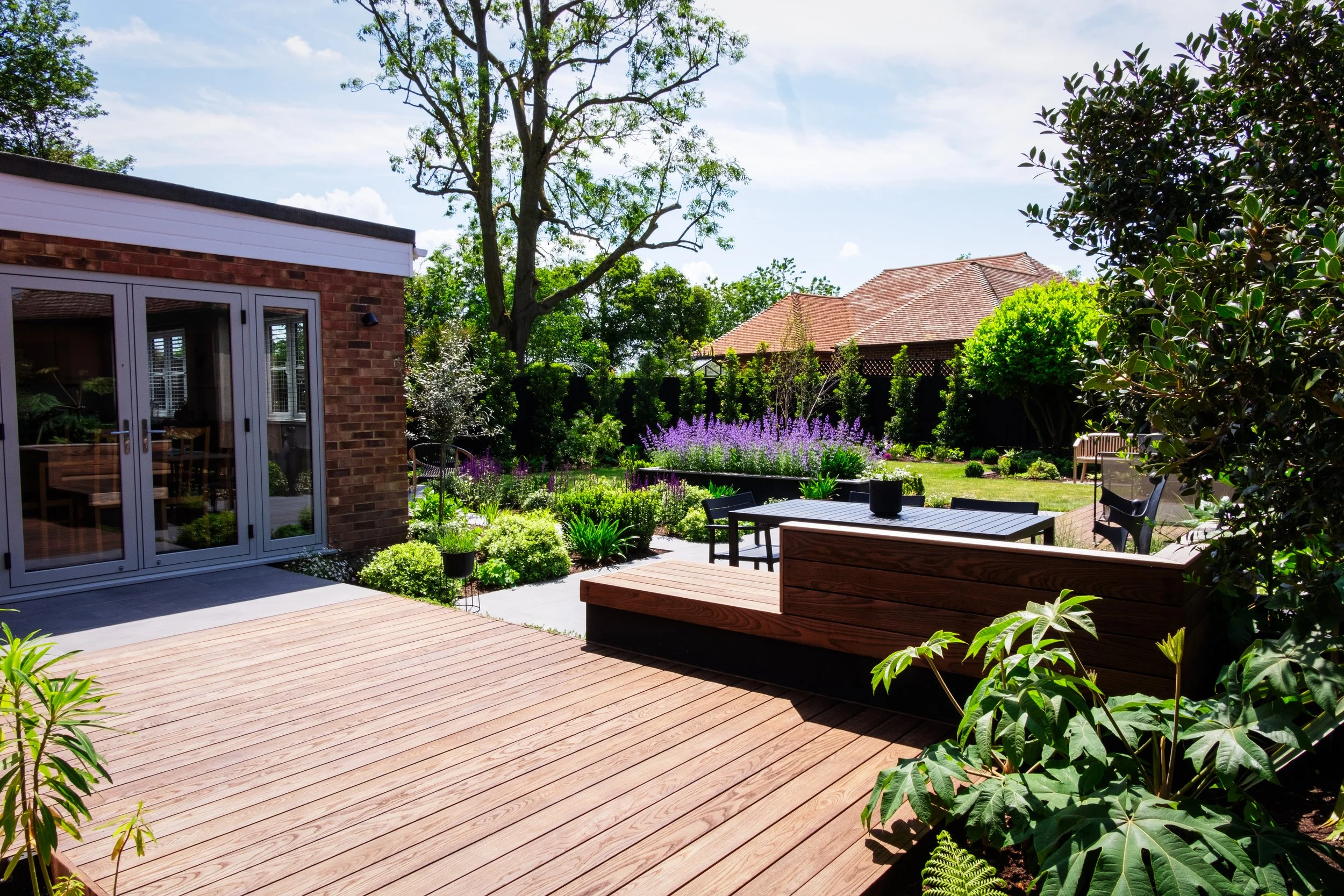
Over the years we have used it for decking, built-in benches and seating, wall cladding, fences and even bespoke garden gates. We keep returning to it for a fairly simple reason: it looks beautiful, feels like proper timber and behaves remarkably well outdoors.
What exactly is thermo ash?
Thermo ash starts life as natural ash timber before undergoing a controlled thermal-modification process using high temperatures and steam.
The treatment changes the properties of the wood rather than simply applying a preservative to its surface. Thermal modification reduces the timber's tendency to absorb moisture, improving its dimensional stability and reducing the amount it swells, shrinks and moves as conditions change. No chemical preservatives are added as part of the thermal-modification process.
That makes it particularly interesting for landscape construction, where timber has to cope with everything the British weather can throw at it.
Why do we like using it?
It is exceptionally stable
This is probably the biggest reason we keep coming back to thermo ash.
Timber is a natural material and some movement is inevitable, but thermal modification significantly improves its dimensional stability. Compared with untreated timber, it is less prone to the swelling, shrinking and distortion caused by changes in moisture.
When you're producing a detailed contemporary garden, that matters.
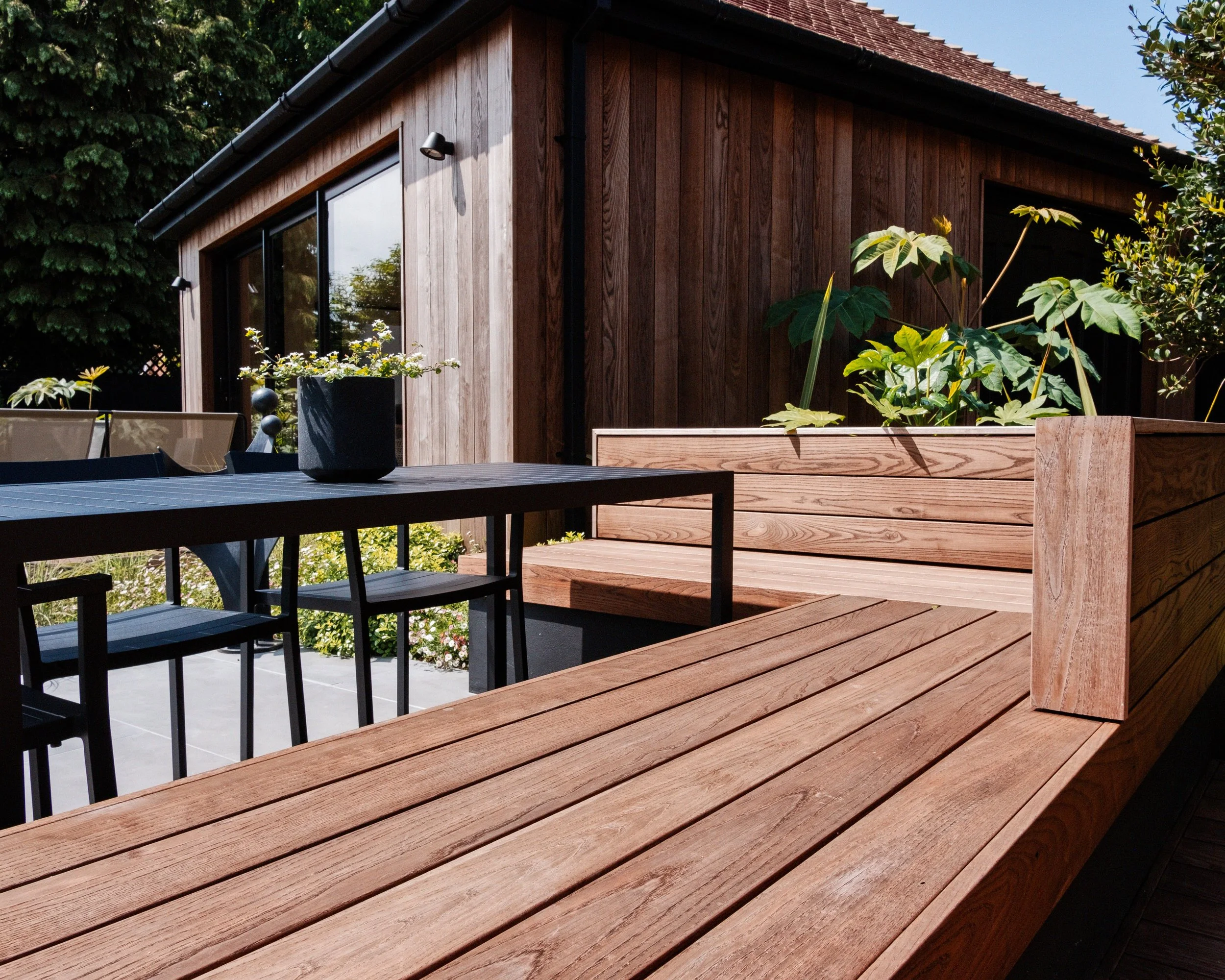
Straight decking lines need to remain straight. Cladding needs to maintain consistent gaps. A bench made from individual boards needs to continue looking crisp rather than becoming a collection of twisted pieces of timber.
And when we're building something like a timber-clad gate, stability becomes particularly important.
It still looks and feels like real wood
There are plenty of man-made alternatives available for exterior construction, but sometimes nothing quite replaces timber.
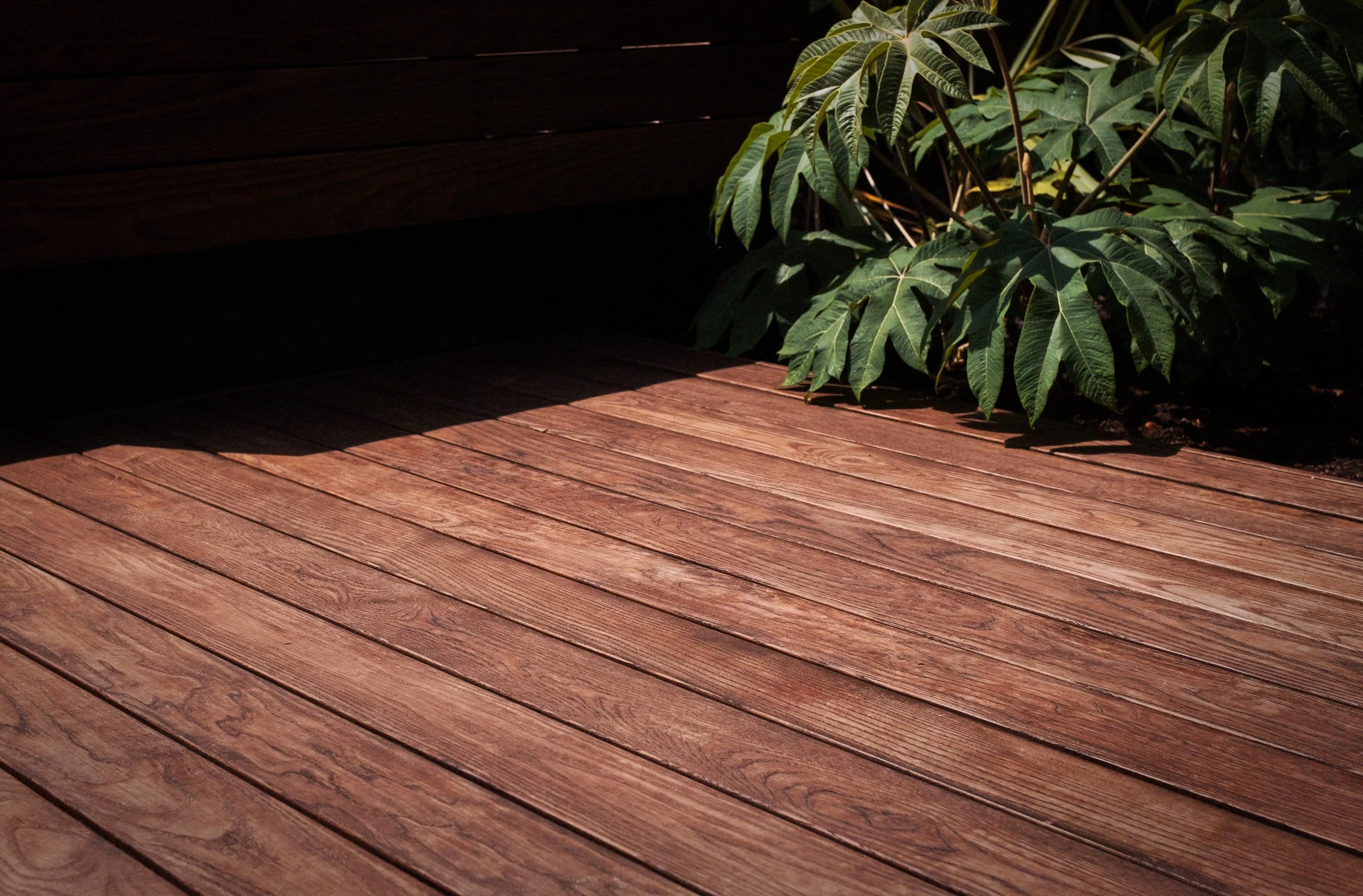
Ash has a particularly attractive grain, and the thermal treatment gives it a rich, darker colour running through the timber rather than simply creating a surface coating.
That combination works extremely well in the type of gardens we build.
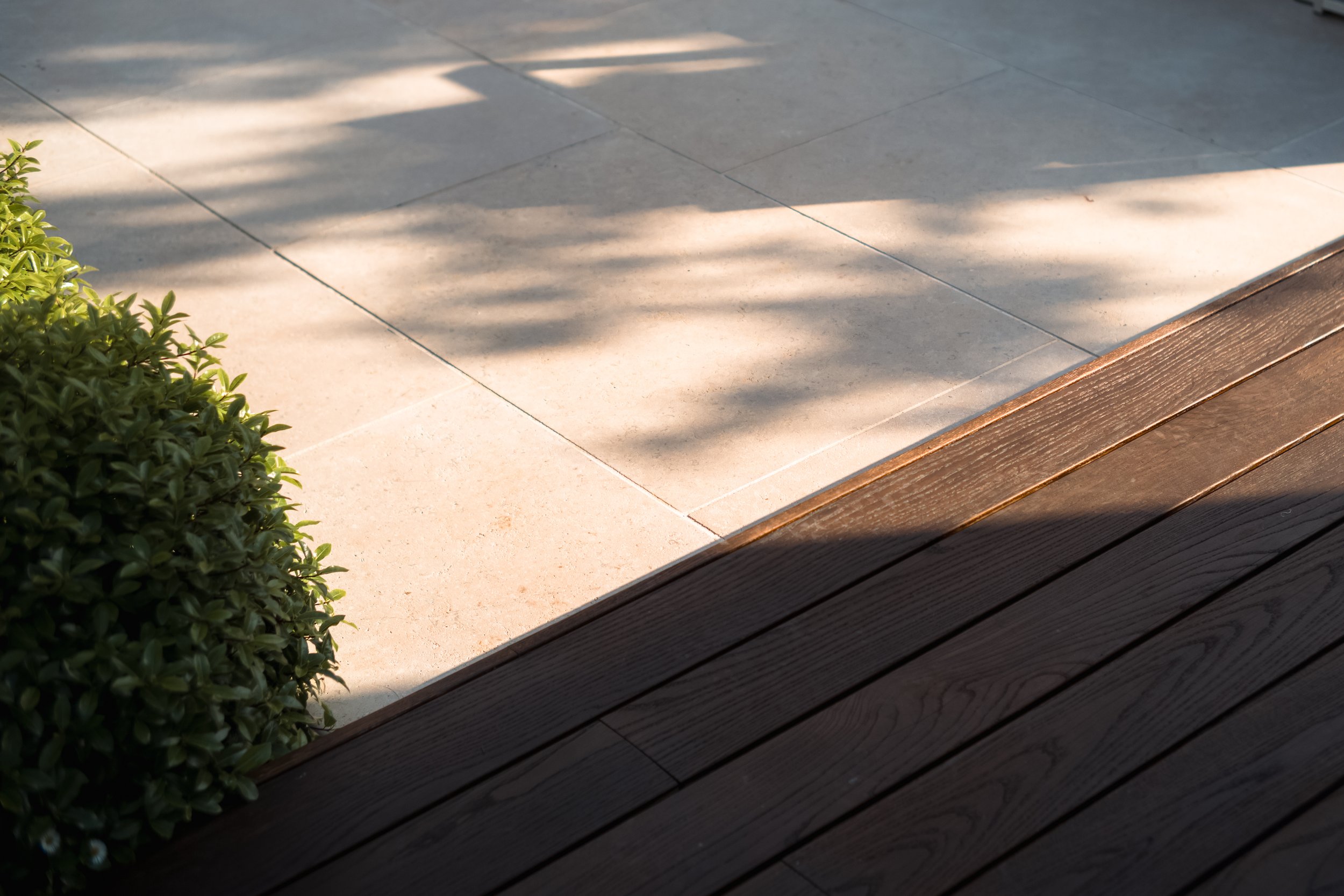
We often use thermo ash alongside natural stone, clay pavers, porcelain, rendered walls and planting. It is contemporary enough to suit modern architecture, but because it is still a natural material, it doesn't make a garden feel sterile.
And it feels great underfoot
That makes it an obvious choice for decking, particularly around seating areas and spaces intended to be used barefoot.
We often prefer a relatively simple board layout with discreet or hidden fixings where possible. The result can be incredibly clean without losing the warmth and texture of natural timber.
The Thermory ash decking supplied by Round Wood of Mayfield is specifically designed for exterior applications and combines the appearance of ash with the durability and stability achieved through thermal modification.
We use it for much more than decking
One of the things we particularly like about thermo ash is being able to repeat the same material through different elements of a garden.
On our projects you may find it used for:
Decking
Built-in benches and garden seating
Wall and structure cladding
Contemporary fencing
Garden gates
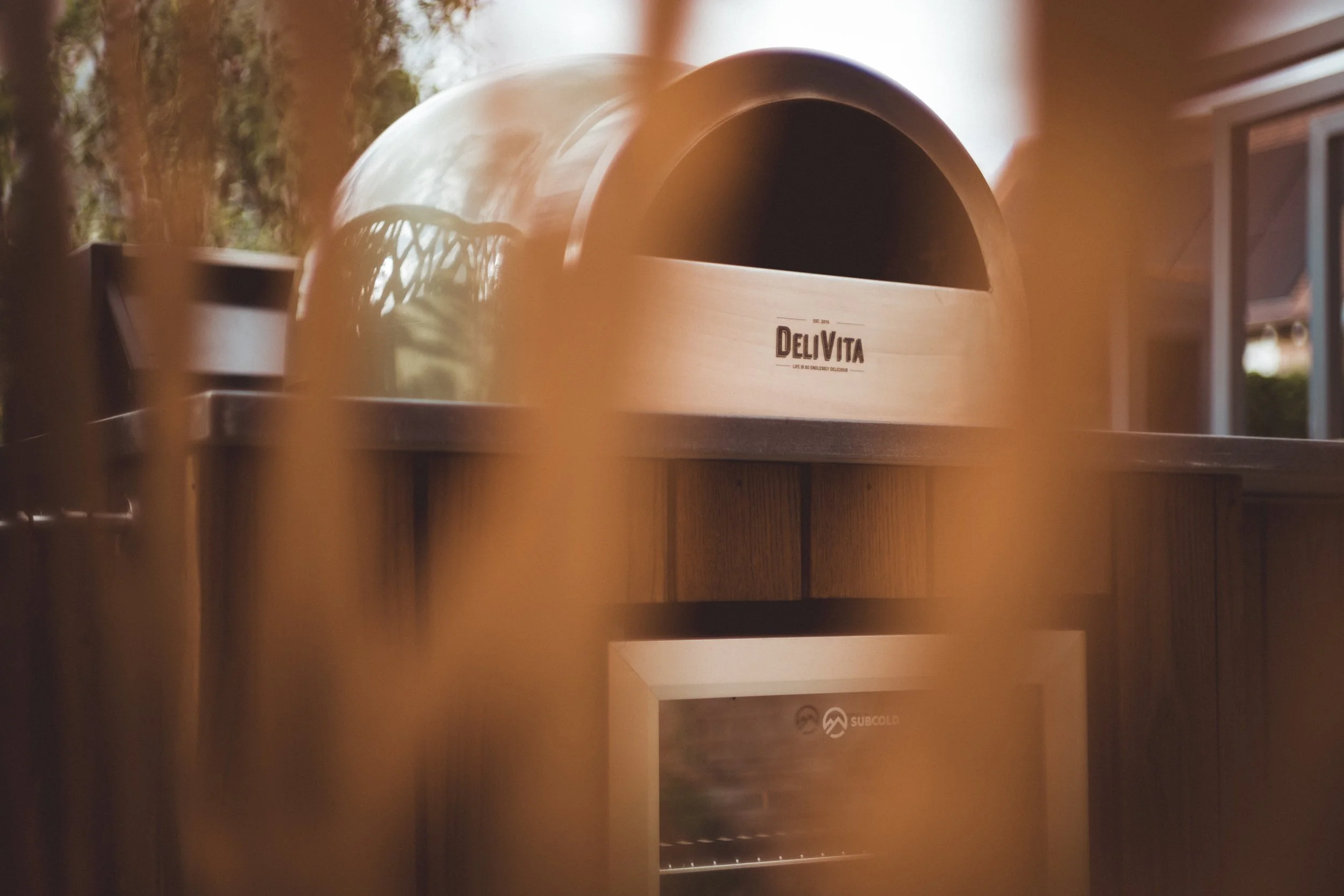
Detailing around outdoor kitchens or entertaining areas
Using the same timber in several places can quietly tie the whole scheme together.
A deck might lead towards a seating area clad in the same ash, while matching battens reappear elsewhere on a fence or gate.
The elements don't necessarily need to look identical — the continuity of material is enough.
What happens to the colour?
This is one thing we always think clients should understand before choosing natural exterior timber.
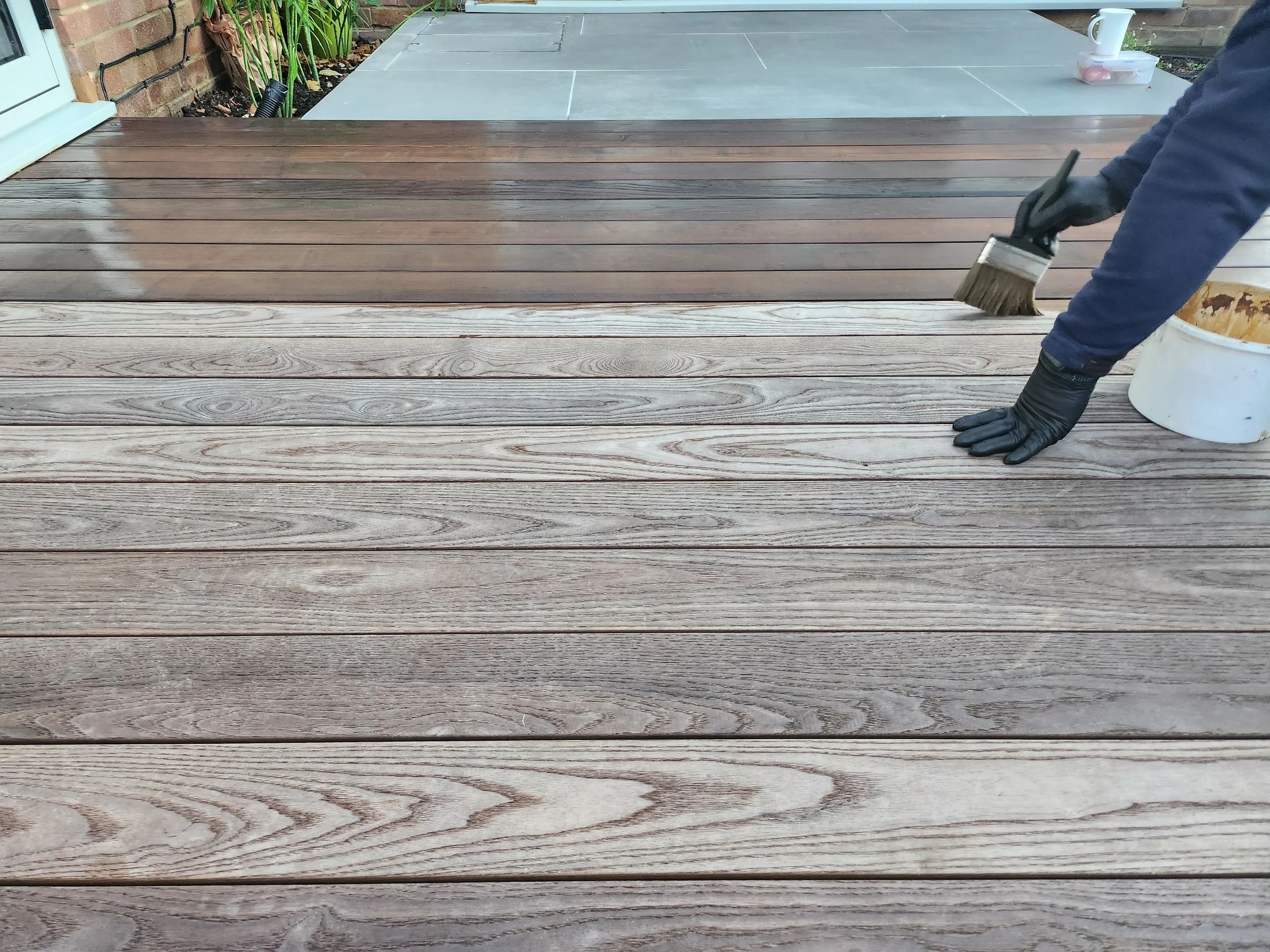
The initial thermo ash colour is a beautiful warm brown, but if it is left untreated outdoors, UV and weather exposure will gradually change the surface to a natural silver-grey patina.
That isn't the timber failing. It's the natural weathering process.
And we actually like both looks.
In some gardens the original rich brown works beautifully and can be maintained with an appropriate UV-protective exterior oil. In others, allowing the timber to silver naturally creates a softer appearance that sits extremely well amongst planting.
The important thing is simply deciding which look you want from the beginning.
Where do we source ours?
For our projects, we source our thermo ash from Round Wood of Mayfield, a local supplier in East Sussex that we have used regularly.
Their range includes thermally modified ash products suitable for applications including decking and cladding, together with the associated fixing systems and profiles.
Having a reliable supplier for a material we use repeatedly is particularly valuable to us, especially when a project involves several different bespoke timber elements.
A material we'll continue using
There isn't one perfect material for every garden.
But where we're looking for the warmth and character of natural timber combined with very good exterior performance and a clean contemporary appearance, thermo ash is usually very high on our list.
We've now used it across enough gardens, and for enough different applications, that we know what we can achieve with it.
From a simple deck to a bespoke bench, a long run of contemporary fencing or a pair of custom-built gates, it is one of those materials that consistently helps us produce the level of finish we're looking for.
And we're sure it will feature in plenty more VU projects to come.